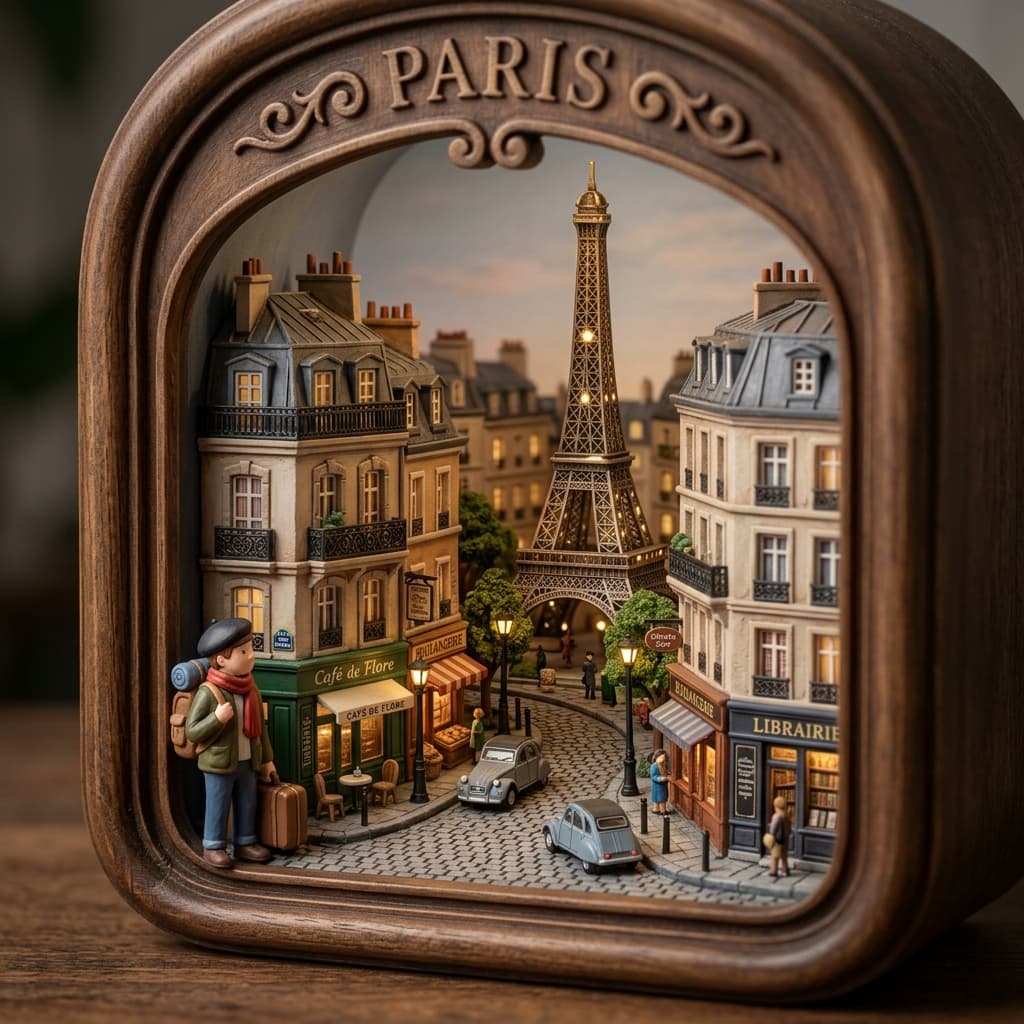
Create a premium, highly detailed 3D miniature travel diorama / destination postcard artwork based on the user's selected destination.
1. Customization Parameters
[destination]
[title]
[subtitle]
[theme]
[color_palette]
[character]
2. Compiled Prompt Preview
Live compiler active
output template
Create a **premium, highly detailed 3D miniature travel diorama / destination postcard artwork** based on the user's selected destination and optional uploaded reference image.
The user will provide:
* **Destination:** {{destination}}
* **Optional Reference Image:** {{reference_image}}
* **Optional Title:** {{title}}
* **Optional Subtitle:** {{subtitle}}
* **Optional Theme:** {{theme}}
* **Optional Color Palette:** {{color_palette}}
* **Optional Character/Traveler:** {{character}}
Use the selected destination as the **core visual identity** of the composition. If a reference image is provided, use it to accurately understand the destination's architecture, landmarks, landscape, atmosphere, colors, and cultural characteristics.
Create a **whimsical handcrafted miniature world contained inside a beautifully designed architectural frame**, resembling a premium collectible travel keepsake, 3D postcard, miniature shadow box, or sophisticated destination diorama.
### Main Composition
Build a large dimensional frame with softly rounded corners, layered depth, bevelled edges, and elegant handcrafted construction.
Inside the frame, create a **miniature three-dimensional representation of {{destination}}** featuring its most recognizable visual characteristics.
Include a carefully composed combination of:
* Famous landmarks
* Characteristic architecture
* Local streets
* Traditional buildings
* Destination-specific landscapes
* Local vegetation
* Recognizable cultural elements
* Bridges, pathways, temples, towers, monuments, or waterfronts where appropriate
* Small atmospheric details
* Destination-specific decorative elements
Do not randomly combine unrelated landmarks. Every major element should feel authentic to the selected destination.
### Dynamic Destination Logic
Automatically adapt the entire scene according to:
{{destination}}
For example:
**Kyoto:** traditional Japanese wooden houses, pagoda, torii gate, stone streets, cherry blossoms, lanterns, distant forested hills.
**Paris:** Eiffel Tower, Parisian buildings, cafés, cobblestone streets, balconies, trees, warm street lamps.
**New York:** skyline, yellow taxis, brownstone buildings, street signs, urban streets, recognizable skyscrapers.
**Venice:** canals, gondolas, Venetian architecture, bridges, water reflections, narrow streets.
**London:** red buses, iconic architecture, brick buildings, London streets, recognizable landmarks.
**Dubai:** futuristic skyline, desert elements, modern architecture, luxury cityscape.
Do not use these examples literally unless the selected destination matches them.
### Miniature Diorama Style
Make the entire destination look like a **beautiful handcrafted miniature model**.
Use:
* Highly detailed miniature architecture
* Tiny realistic buildings
* Sculpted landscapes
* Small trees and plants
* Miniature people
* Tiny vehicles
* Small street furniture
* Handcrafted textures
* Layered physical depth
* Realistic miniature materials
* Subtle imperfections
* Fine craftsmanship
The scene should feel like a professionally constructed physical diorama photographed in a studio.
### Layered Depth
Create multiple physical depth layers:
**Foreground:** small decorative objects, flowers, trees, pathways, signs, or miniature travelers.
**Middle ground:** main buildings, streets, landmarks, bridges, and cultural elements.
**Background:** distant mountains, skyline, architecture, clouds, landscape, or atmospheric scenery.
Use realistic depth separation between every layer.
### Signature Landmark
Select **one primary recognizable landmark or destination feature** as the hero element.
Make it slightly larger and more visually prominent than surrounding elements while maintaining realistic scale within the miniature world.
The landmark should immediately communicate:
**“This is {{destination}}.”**
### Circular / Geometric Feature
Integrate an elegant geometric opening, arch, circular window, or dimensional frame within the miniature scene.
Inside this feature, showcase a **secondary iconic view of the destination**, such as:
* A distant landmark
* Scenic landscape
* Mountain
* Temple
* Monument
* Skyline
* Waterfront
* Cultural structure
The secondary view should create a layered **picture-within-a-picture** effect.
### Character Element
If {{character}} is provided, naturally incorporate the character as a **tiny miniature traveler or storyteller figure** interacting with the destination.
The character may be:
* Sitting on top of the frame
* Standing beside a suitcase
* Holding a camera
* Looking toward the landmark
* Sitting near the destination scene
* Walking along a miniature pathway
Keep the character small enough that the destination remains the primary focus.
If no character is provided, optionally add a tiny generic traveler figure with luggage, camera, backpack, or travel accessories.
### Decorative Travel Details
Add subtle travel-themed elements around the main frame:
* Tiny location pin
* Dotted travel route
* Small paper airplane
* Suitcase
* Passport-inspired decorative elements
* Miniature compass
* Subtle map markings
* Small travel icons
These elements should remain understated and should never overpower the destination.
### Typography
Display:
**{{title}}**
as the primary destination title.
If no title is supplied, automatically use:
**{{destination}}**
Optional:
**{{subtitle}}**
Use elegant premium typography integrated into the physical design.
The text should look **physically printed, embossed, engraved, or raised** on a small dimensional plaque attached to the frame.
Do not place random text anywhere else.
If text rendering is unreliable, prioritize the visual composition and leave a clean plaque area for text overlay.
### Color & Material
Use a sophisticated palette based on:
{{color_palette}}
If no palette is provided, automatically select colors inspired by the destination.
Use realistic physical materials such as:
* Matte painted wood
* Ceramic
* Paper
* Plaster
* Sculpted clay
* Natural stone
* Fabric
* Painted metal
* Frosted acrylic
Materials should have subtle tactile texture and realistic imperfections.
### Lighting
Use **soft premium studio lighting** to photograph the miniature scene.
Create:
* Warm directional key light
* Soft ambient fill
* Gentle rim lighting
* Delicate shadows
* Subtle highlights on the frame
* Tiny realistic shadows between miniature objects
* Soft atmospheric glow
* Natural depth-enhancing illumination
Make the lighting emphasize the handcrafted dimensionality of the diorama.
### Camera & Photography
Photograph the miniature world like a **high-end collectible product advertisement**.
Use:
* Professional full-frame camera
* 50mm macro-style lens
* Slightly elevated three-quarter perspective
* Controlled shallow depth of field
* Focus stacking where appropriate
* Extremely detailed foreground
* Soft background falloff
* Realistic optical rendering
* Subtle film grain
* High dynamic range
* Premium commercial photography
The result should look like a **real physical miniature photographed with a macro lens**, not a flat digital illustration.
### Composition
Use a balanced vertical composition with:
* Large central dimensional frame
* Destination scene occupying most of the frame
* Primary landmark clearly visible
* Secondary scene inside the geometric opening
* Small character/traveler detail near the frame
* Destination title on an elegant plaque
* Subtle travel decorations around the bottom
* Clean surrounding background
* Strong visual hierarchy
* Generous breathing room
### Background
Use a clean, softly textured studio background that complements the destination.
The background should be simple and slightly blurred so the miniature diorama remains the hero.
Avoid distracting objects outside the main composition.
### Visual Personality
The final image should feel:
**Whimsical • Premium • Handcrafted • Nostalgic • Magical • Travel-inspired • Sophisticated • Collectible • Cinematic**
It should resemble a **luxury miniature travel souvenir transformed into a beautifully photographed piece of art**.
### Strict Constraints
Do not:
* Flatten the miniature scene
* Create a generic travel collage
* Randomly combine landmarks from different destinations
* Use unrelated architecture
* Distort recognizable landmarks
* Make the scene look like a normal photograph
* Make it look like a basic cartoon
* Use excessive fantasy elements
* Use excessive text
* Generate gibberish
* Change the destination name
* Add random logos
* Add watermarks
* Create floating objects
* Use inconsistent lighting
* Make miniature objects disproportionately large
* Make the frame visually overpower the destination
**Final goal:** Generate a **dynamic, destination-aware, photorealistic miniature travel diorama** where {{destination}} is transformed into an intricate handcrafted three-dimensional world inside an elegant frame, enhanced with authentic landmarks, local architecture, tiny storytelling details, optional traveler character, dimensional typography, beautiful lighting, and premium macro photography.
1Customize Variables
Fill in the parameters on the left. Type custom topic, instructions, or adjust selectors to fit your exact business goals.
2Live Compiler Updates
The template values will be automatically inserted into the placeholders in real time on the right preview window.
3Copy & Paste to AI
Click the large action button to copy the compiled prompt, then paste it directly into Midjourney to experience top outcomes.
An ethereal, ultra-realistic portrait of a woman in a hijab gently holding a delicate pale pink rose over one eye, surrounded by blooming garden foliage.
A beautiful double-exposure composite featuring a large portrait and a smaller full-body figure set against a watercolor and doodle scrapbook background.